1. Our team will reach out in <30 minutes.
Check your inbox or phone, we’ll tailor your demo to your use case.
2. We build your custom demo
Flowcodes, FlowURLs, and FlowHubs with the data behind the whole platform - so you see exactly what Flowcode unlocks.
3. You go live in days
Our team handles setup. You handle growth.









.webp)
























.png)


.png)




.png)


.png)

.png)

%20copy%203.png)



.png)




Back to all articles
Why Enterprise Marketers Are Spending More on IRL Even as Digital Budgets Shrink
May 8, 2026
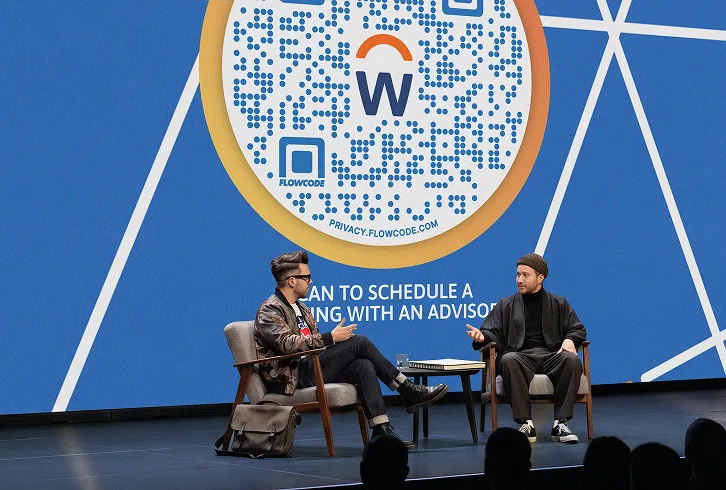

Digital marketing got measurable a decade ago, and the budget moved there. IRL marketing is becoming measurable now, and the budget is moving there. The brands that build the measurement infrastructure first will get a multi-year head start on a market that's about to become the most important growth lever in consumer marketing.
There's a budget pattern hiding in this year's marketing reports that says something important about where consumer attention is going.
The budgets are moving
Event budgets grew at 10.9% in 2026 even as overall B2B marketing spend declined. 84% of consumer marketers and 86% of B2B marketers plan to increase event spend in 2026. Meanwhile, digital advertising costs continue to climb, attribution continues to fragment, and the return on the average digital impression continues to compress. The smart money is moving toward physical moments.
The math behind the shift
The reasoning isn't sentimental. It's mathematical. The cost of reaching a meaningful customer through digital advertising has gone up year over year as the digital ad market has matured and saturated. The cost of reaching that same customer through a well-executed real-world activation has held steady or come down, especially for brands that have moved past pop-up-as-PR-stunt and started running IRL as a repeatable acquisition channel. When the cost-per-meaningful-interaction crosses over, budget follows.
The budget keeps moving only if you can prove ROI
The CFO question, how much did that event actually generate, is a question most experiential programs cannot answer well. The data is too messy. The handoffs between the physical moment and the digital follow-up are too lossy. The attribution model doesn't extend to the parking lot or the trade show floor. So the budget grows, but it grows on faith, and faith-based budgets get cut the moment a CFO needs a number to tighten.
What the winners are doing differently
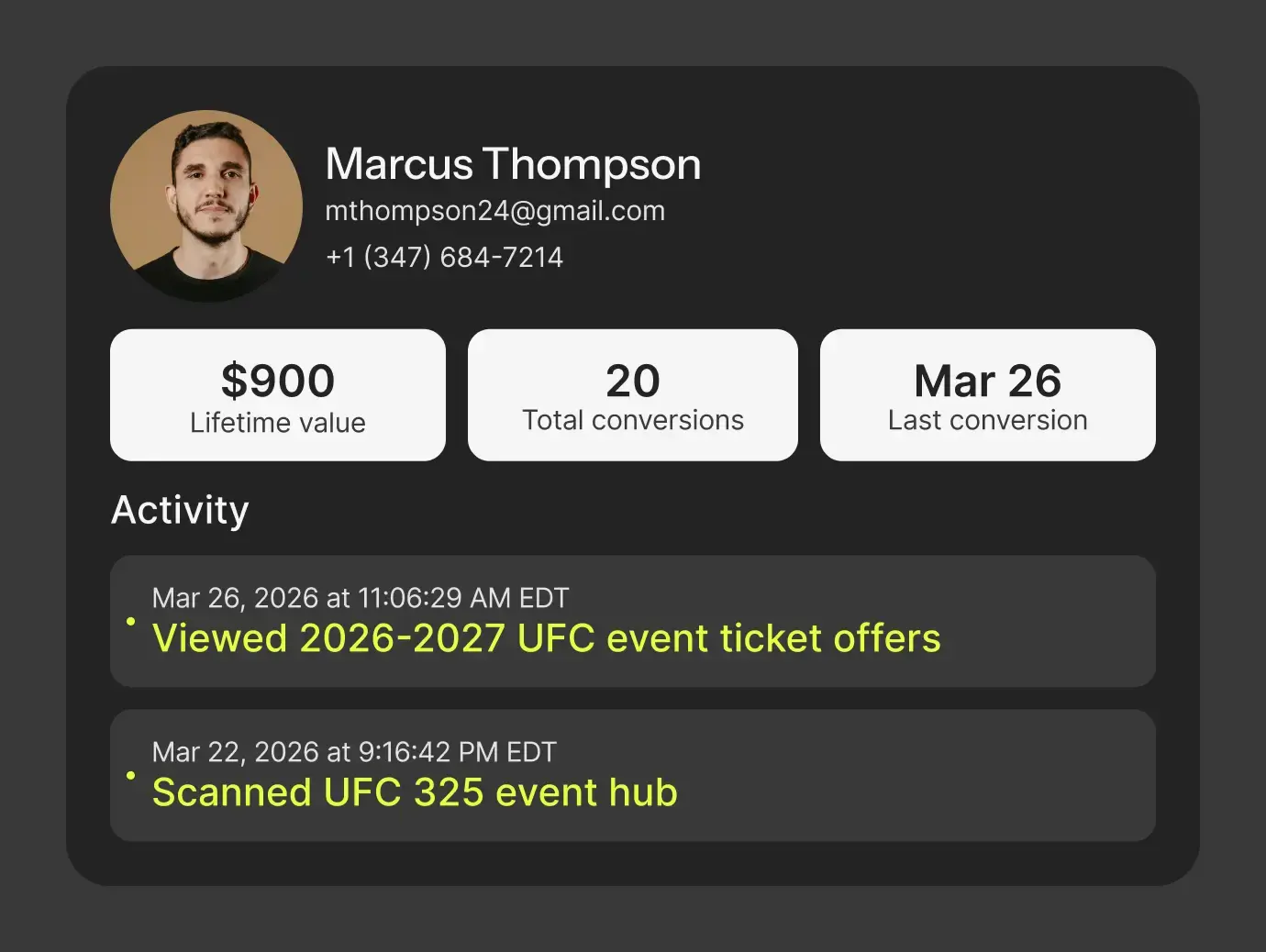
The brands that have figured out how to instrument their IRL programs are the ones taking budget share away from the brands that haven't. Their event ROI numbers don't come from estimates. They come from named contacts captured at the moment of engagement, attributed downstream through the CRM, and matched against actual purchase data. Their out-of-home ROI numbers don't come from impression studies. They come from scans, FlowURL clicks, and conversions that fed directly into a measurement layer.
The instrumentation isn't exotic anymore
A code on a piece of signage at a trade show captures attendee identity at the moment of interest. A connection at a stadium ties a scan to a fan profile in the CRM. A FlowURL on a piece of direct mail attributes every downstream click back to the household it was sent to. The Flowcode Conversion Pixel extends attribution to any external destination: page views, form submissions, button clicks, purchases. The brand can trace the path from a billboard impression to a final purchase weeks later.
When every physical touchpoint is instrumented this way, "how much did that event generate" stops being rhetorical. It becomes a query.
The leading indicator of the next decade
Digital marketing got measurable a decade ago, and the budget moved there. IRL marketing is becoming measurable now, and the budget is moving there. The brands that build the measurement infrastructure first will get a multi-year head start on a market that's about to become the most important growth lever in consumer marketing.