1. Our team will reach out in <30 minutes.
Check your inbox or phone, we’ll tailor your demo to your use case.
2. We build your custom demo
Flowcodes, FlowURLs, and FlowHubs with the data behind the whole platform - so you see exactly what Flowcode unlocks.
3. You go live in days
Our team handles setup. You handle growth.





















Back to all articles
Personalization at Scale Is About to Rewrite the 2027 Budget
November 6, 2026

Real-world marketing - packaging, sponsorships, broadcast - reaches more people than ever but can’t prove who it reached, and as 2027 budgets get finalized, that’s becoming a liability digital doesn’t share; the fix is personalization at a scale AI has only just made affordable.
Digital advertising answers for itself: impressions, clicks, conversions, a cost per acquisition down to the decimal. Real-world marketing, packaging, sponsorships, a broadcast spot, still run largely on estimates. That gap isn’t a creative shortfall, it’s a measurement one. And that measurement is what’s going to determine your 2027 budget.
We call these naked touchpoints
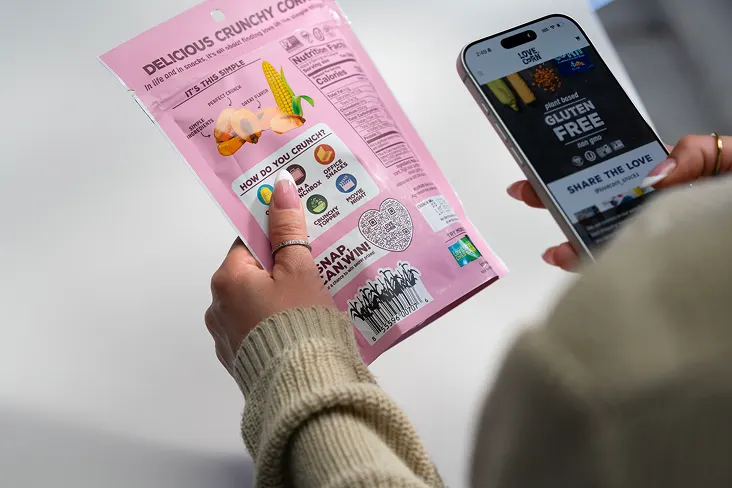
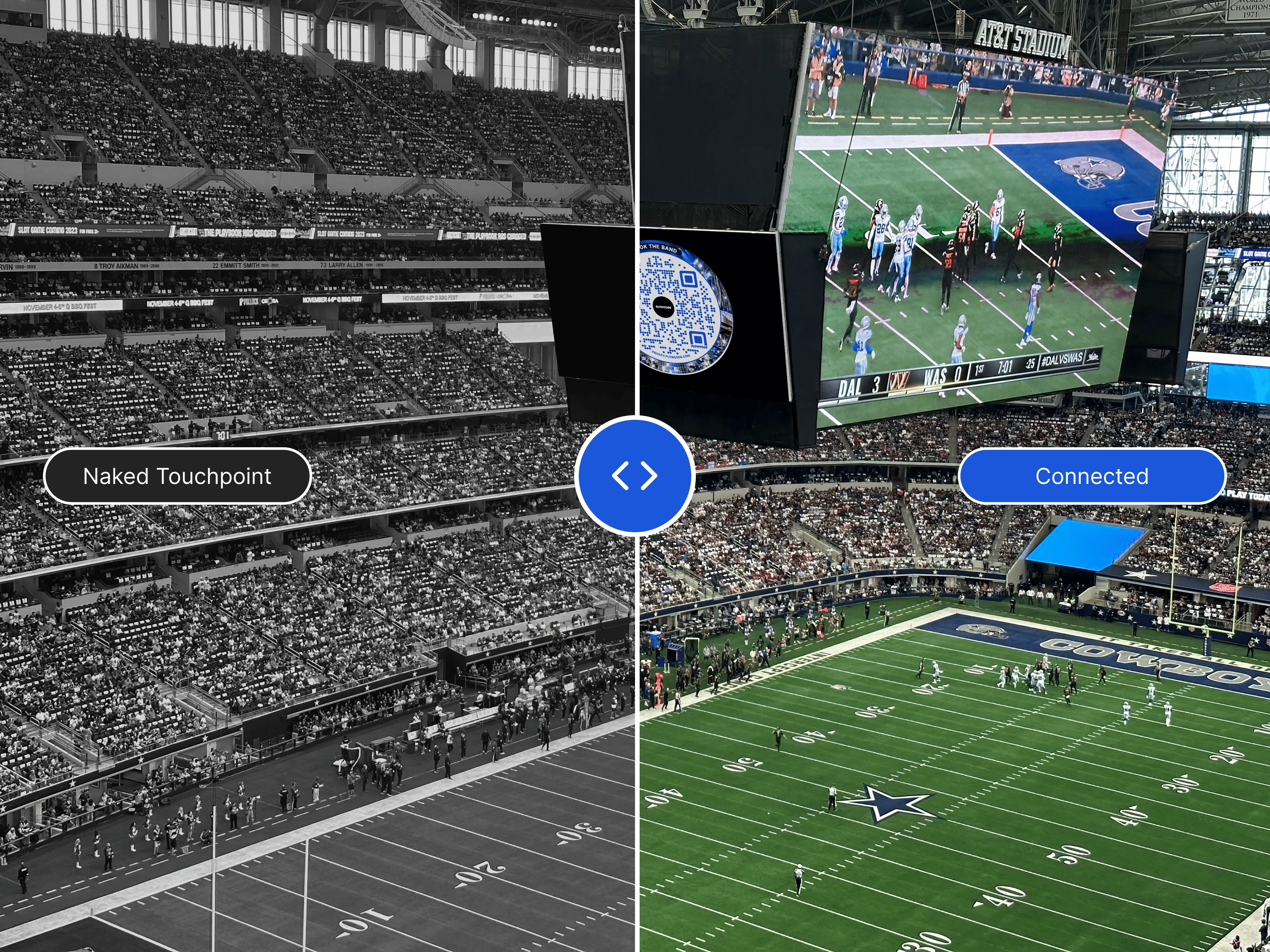
Naked touchpoints are how we define real-world moments where a brand reaches an audience, but has no way to know who that is or what they did next. The package. The billboard. The mailer. The thirty-second spot on TV. Each one has the potential to reach millions of people, but none of that reach converts into a number you can act on.
For twenty years, that was simply the cost of doing real-world marketing. It isn’t anymore. The constraint that made personalized, trackable experiences too expensive to run at scale - the cost of producing unique creative for each person - has effectively disappeared.
The numbers behind the shift
Advertising has run for a century on the economics of mass production: one piece of creative, bought against millions of impressions, measured however possible. That math held up when personalizing creative for every individual was too expensive.
It no longer is. Once a brand can produce its own creative for each customer at near-zero marginal cost, the real question for a 2027 budget isn’t whether personalization is affordable, it’s whether staying unmeasured still is.
Personalization at scale
Personalization and scale used to be opposites: a brand could speak to one person, or it could speak to millions. A sports fan, a first-time shopper, and a ten-year loyal customer all saw the same ad, because a different one for each of them was never worth the cost.
That tradeoff no longer holds. A sports fan can get an experience built around their team. A shopper can get a personalized landing page that reflects what they just bought. A loyal customer can get an entirely different discount than someone discovering the brand for the first time, all on the exact same touchpoint. That requires knowing who’s in front of you, which is what a first-party identity layer like FlowID is for, and routing them accordingly, the way Smart Rules lets a single Flowcode serve a different experience by audience, device, or moment. The brands that act on this first aren’t getting better creative, they’re getting a touchpoint that can say something different to everyone it reaches, at the production cost of one.
To prove this, we’re testing it ourselves
Flowcode demonstrated this directly through an AI band we’ve aptly named The Naked Touchpoints. The band wrote personalized songs for brands across the industry. Each one is a love letter to that brand: its packaging, its sponsorships, its ads and the fans who light up when they see them. Some are catchy. Some are a little ridiculous. That’s on purpose.
We’re releasing them everywhere marketers already talk: across social, in the communities where brand teams share their work, and in the rooms where the industry’s top marketers gather. If you hear your brand’s name in a chorus this week, that’s why.
Why music? Because nobody forwards a white paper about themselves, but everybody forwards a song about themselves. A marketing team that hears a song about its own company sends it to the CMO. The CMO plays it in the Monday meeting. Suddenly a room full of marketers is talking about all the fans waiting to connect with their brand. That’s the conversation we wanted to start.
The kind of project this replaces, a dedicated creative team and weeks of production, used to make this impossible for one CMO, let alone a few hundred. Now it happens in the time it takes to generate a track. It’s one proof point among several, and more waves are already in motion.
Curious to see more? Check out our campaign page here.
What makes a touchpoint measurable rather than naked
Four capabilities separate a touchpoint that can defend its ROI from one that can’t:
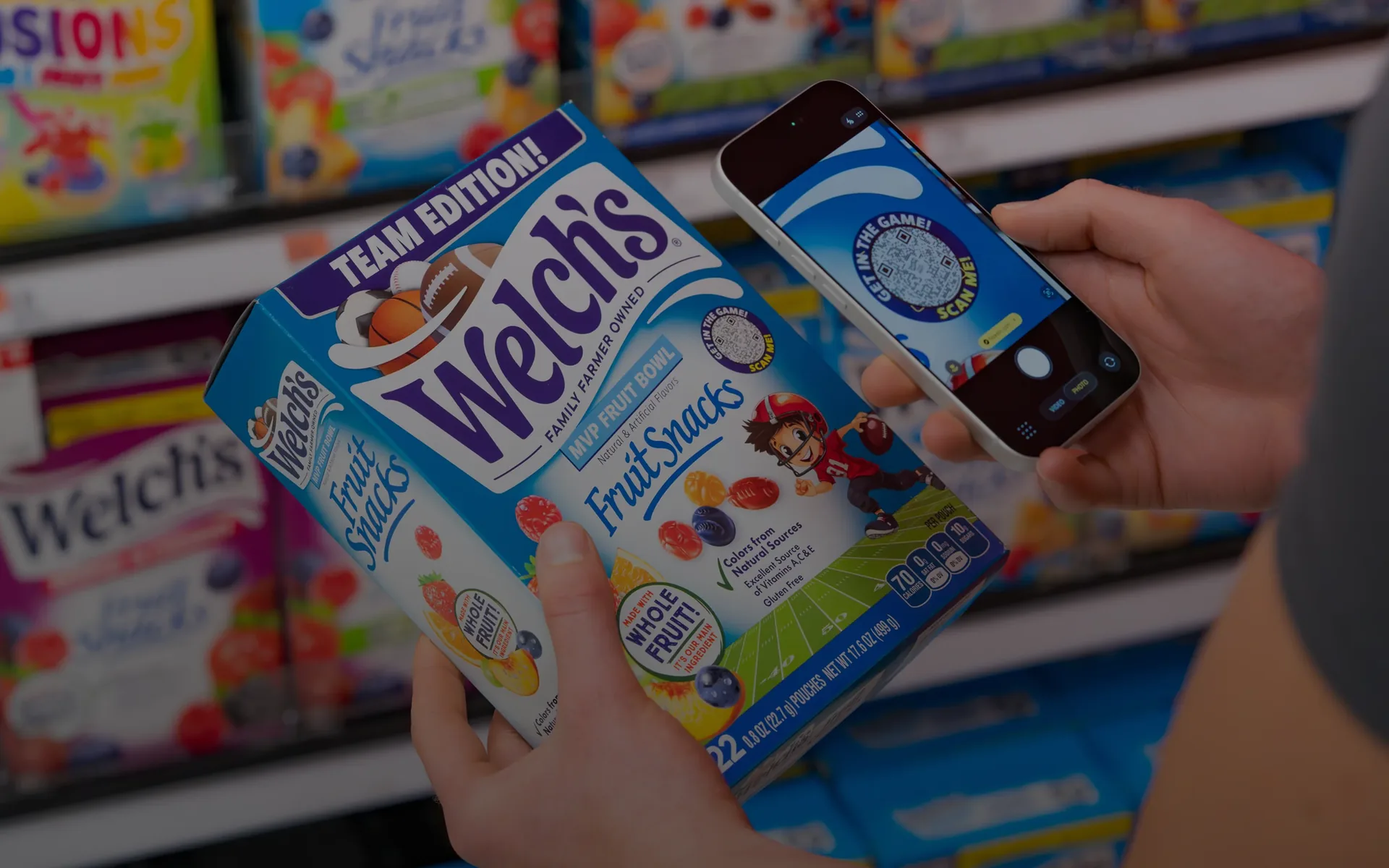
- It invites a connection. A Flowcode or FlowURL turns “I noticed this” into “I’m interested” in a single action, on a phone already in hand.
- It delivers value in return. A FlowHub opens an experience built for that exact moment: an offer, a video, a sweepstakes, a way to buy.
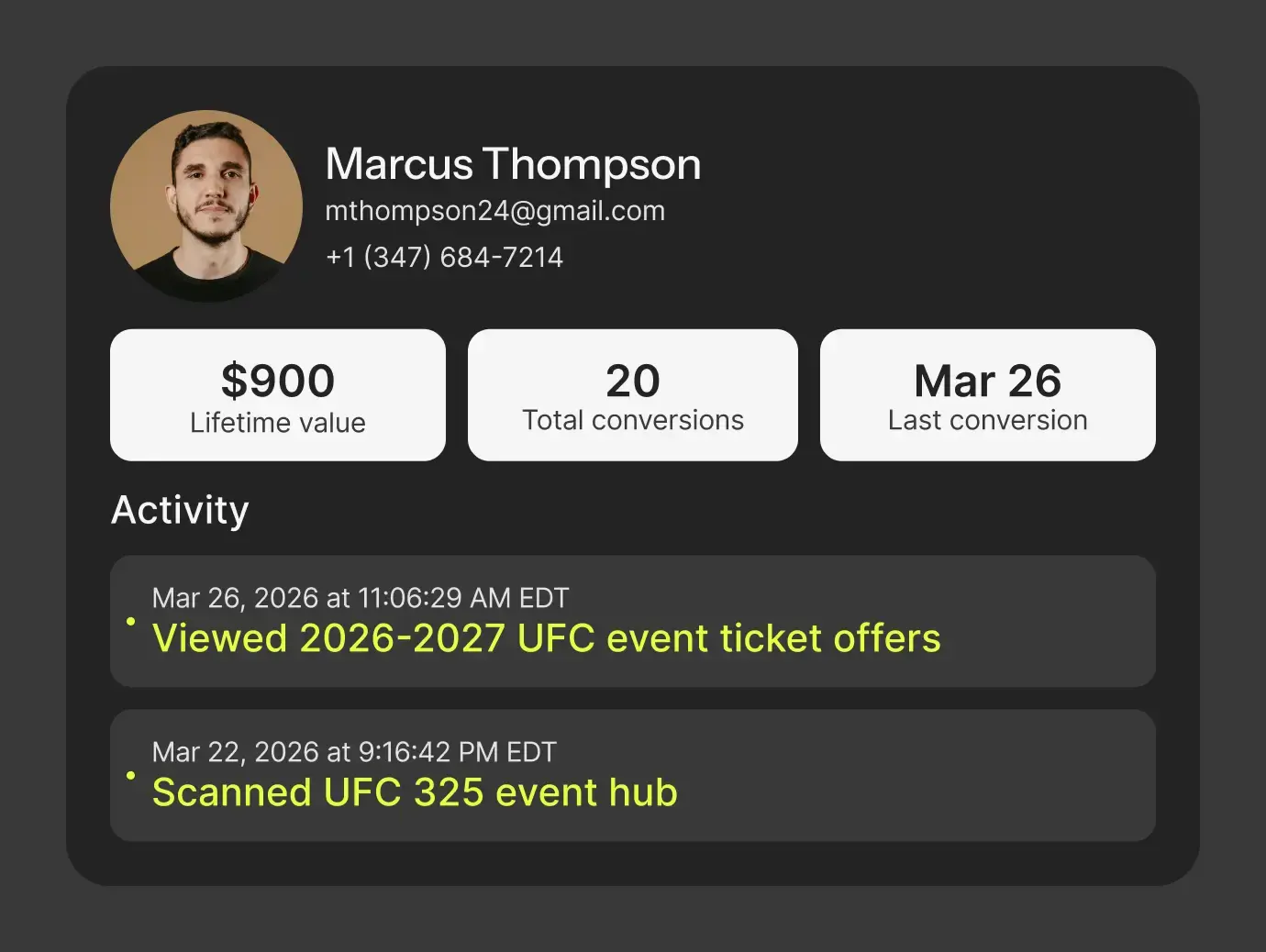
- It remembers who engaged. FlowID turns that connection into a first-party profile the brand owns outright, synced directly into its CRM.
- It reports the outcome. Analytics, custom dashboards, and pixels tie the moment to revenue, not just engagement.
Frequently asked questions
What is a naked touchpoint? A naked touchpoint is any real-world marketing moment, packaging, sponsorship, broadcast, out-of-home, that reaches an audience but captures no data on who engaged or what happened next, unlike a digital touchpoint, which tracks that by default.
Why does this matter more for 2027 budgets specifically? Because the production cost of personalized, trackable creative has dropped sharply due to AI, the comparison between an unmeasured real-world channel and a measured digital one is no longer about capability, it’s a choice, and that choice is harder to justify in a budget review every year it continues.
How does Flowcode make a real-world touchpoint measurable? By pairing a connection mechanism (Flowcode or FlowURL) with a first-party identity layer (FlowID) and outcome tracking (analytics and the Flowcode Pixel), so a single physical touchpoint can identify who engaged and report what that engagement was worth.
What this is worth to your 2027 planning
Most companies have never quantified what their real-world touchpoints are failing to capture: the fans, the data, the revenue walking past every ticket gate, every package, every billboard. And most 2027 budgets are being finalized without that answer.
That’s the gap Flowcode was built to close. Book time with our team to see what’s possible for your own touchpoints.