1. Our team will reach out in <30 minutes.
Check your inbox or phone, we’ll tailor your demo to your use case.
2. We build your custom demo
Flowcodes, FlowURLs, and FlowHubs with the data behind the whole platform - so you see exactly what Flowcode unlocks.
3. You go live in days
Our team handles setup. You handle growth.









.webp)


























.png)




.png)







.png)


.png)

.png)

%20copy%203.png)




.png)






Back to all articles
The 5-Second Rule: Why Mobile Page Speed Decides Your Conversion Rate
May 8, 2026

The five-second landing page is the most expensive thing in modern marketing. The one-second landing page is, in practical terms, a different product entirely. Build for the second one.
There's a brutal piece of data every marketing leader should have tattooed on the inside of their eyelids: pages that load in one second convert three times better than pages that load in five.
Three times. Not 10% better. Not 30% better. Three hundred percent better, on the same page, with the same copy, to the same audience. The only variable is how fast the page renders.
Mobile makes the math worse
More than half of all web traffic now comes from mobile devices, and mobile users have less patience, lower bandwidth, and fewer ways to recover from a slow experience than desktop users. A mobile user who hits a five-second landing page doesn't wait. They bounce, and they bounce permanently. The acquisition dollar that drove them to the page is gone. The campaign attribution shows a click but no conversion. The marketing team blames creative when the actual culprit is page weight.
Three quiet killers
The first is desktop-first design. Most enterprise landing pages are still designed in a desktop tool, with desktop image sizes, desktop fonts, and desktop layouts that get responsive treatment as an afterthought. The result is four megabytes of assets delivering an experience the mobile user can only see one screen of at a time.
The second is form length. Every additional field reduces conversion by 10 to 15 percent. Form-length reduction can deliver a 120% conversion lift with implementation measured in hours. Yet most enterprise pages still ask for first name, last name, email, phone, company, role, and three optional checkboxes.
The third is the absence of a sticky CTA. A mobile user scrolls. The CTA at the top of the page disappears the moment they start engaging with the content beneath it. By the time they're ready to convert, the button is somewhere they're not looking. A sticky CTA that follows the user down the page removes that friction entirely. It costs nothing to implement and shows up in conversion data immediately.
Micro-copy compounds the lift
Changing a single CTA from "Sign up for free" to "Trial for free" has been shown to lift trial start rate by 104%, because "Sign up" implies ongoing commitment while "Trial" implies temporary evaluation. Multiply that kind of micro-optimization across every CTA, every headline, and every form field, and the cumulative gain is the difference between a campaign that pays for itself and one that doesn't.
What FlowHub is built on
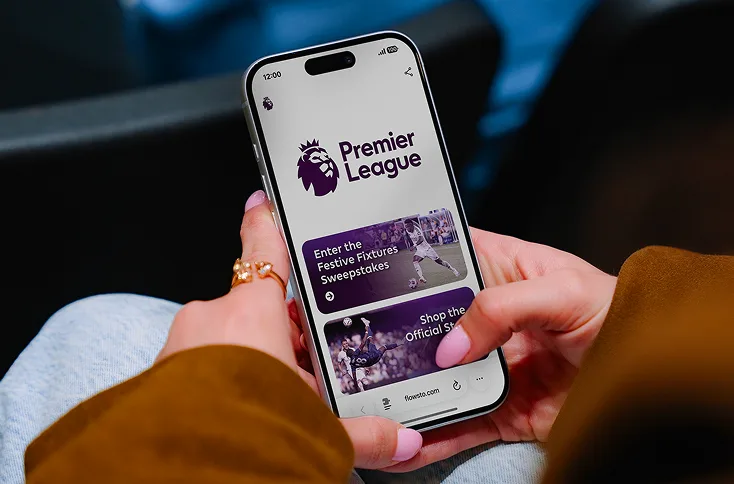
Every FlowHub is mobile-first by default, designed for the smallest screen and scaled up. Forms are short, configurable, and only ask for what the campaign actually needs. CTAs stay sticky on mobile so the conversion action never disappears. Because the hub lives inside a platform that owns the entire customer journey from scan to conversion, the team can test, measure, and optimize without engineering tickets or developer queues.
The five-second landing page is the most expensive thing in modern marketing. The one-second landing page is, in practical terms, a different product entirely. Build for the second one.