1. Our team will reach out in <30 minutes.
Check your inbox or phone, we’ll tailor your demo to your use case.
2. We build your custom demo
Flowcodes, FlowURLs, and FlowHubs with the data behind the whole platform - so you see exactly what Flowcode unlocks.
3. You go live in days
Our team handles setup. You handle growth.








.webp)

.png)
.png)
.png)

.png)

.png)
%20copy%203.png)

.png)

Back to all articles
Dynamic QR Codes: The Enterprise Guide
August 18, 2026
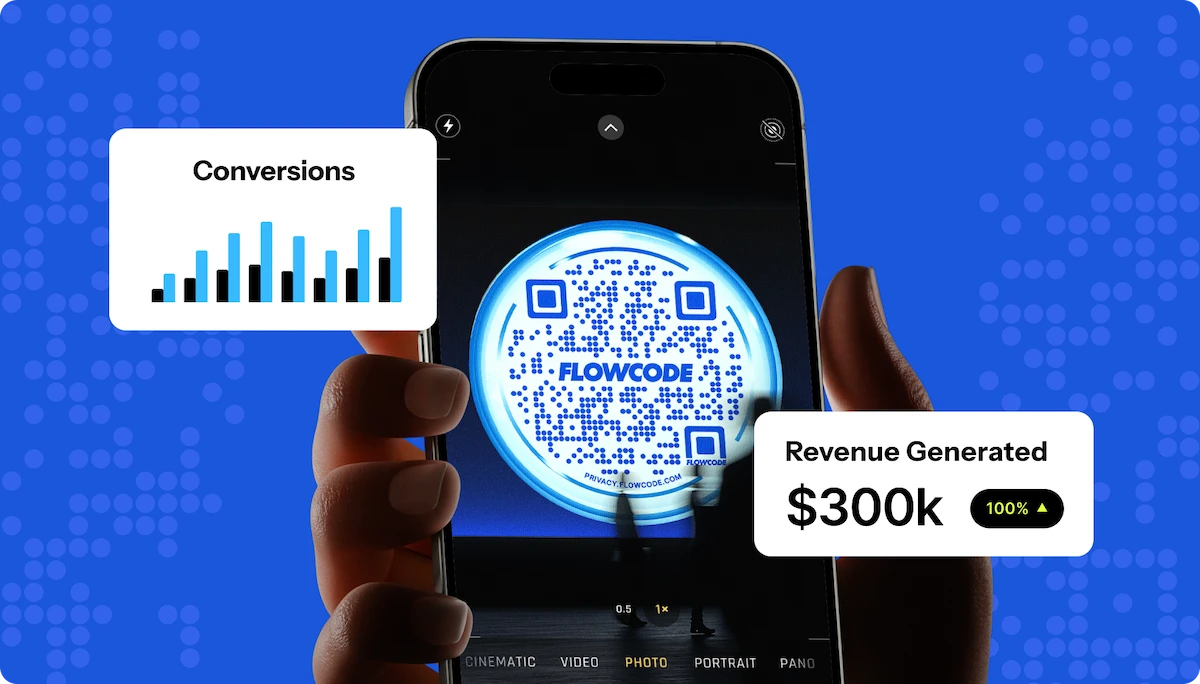
Dynamic QR codes turn physical marketing into a measurable digital channel. Unlike static QR codes, they let you change destinations after printing, track scans, personalize experiences, and connect offline interactions to conversions. For businesses, that means packaging, events, ads, and other physical touchpoints can generate actionable data and attribution, helping teams measure ROI instead of relying on guesswork.
A dynamic QR code is a scannable code whose destination lives on a short redirect URL you control, not fixed inside the pattern itself. You can change where it points after it is printed, and every scan returns first-party data: location, device, time, and downstream conversion. That editability is what separates a marketing asset from a dead end.
Here is the part most QR conversations skip. Roughly 81% of commerce still happens in the real world. Almost none of it is measured. Marketing spent two decades making the digital click accountable while the physical touchpoint stayed a guess. A dynamic QR code is the bridge between the two. It turns any surface into a measurable channel and gives the offline team the same attribution the digital team already takes for granted.
This guide covers what a dynamic QR code is, how it differs from a static one, how the technology actually works, where enterprise brands put it to use, and how to create one that feeds your CRM instead of a spreadsheet.
The framing matters more than the format. Treat a dynamic QR code as a cheaper way to make a QR image and you will get a scan count and little else. Treat it as the entry point to an offline-to-online conversion system, and the same code becomes the most accountable line item in your physical marketing budget. Enterprise buyers who win the CFO conversation are working from the second definition.
What a dynamic QR code is
A dynamic QR code stores a short redirect URL rather than a final destination. When someone scans it, the code sends them to a server that routes the request to wherever you point it that day. Because the printed pattern never changes, you can edit the destination, run experiments, and measure every scan without reprinting a thing.
The distinction sits in what the data pattern actually encodes. A static code encodes your destination directly: the URL, the text, the contact card. Whatever you put in is locked the moment it is generated. A dynamic code encodes a short redirect instead. That redirect is a lightweight address you own, and the real destination sits behind it, fully editable.
That one design choice changes the economics of physical marketing. A printed magazine ad, a stadium banner, a product carton: none of these can be recalled once they ship. With a static code, a typo or an expired campaign means the asset is dead on arrival. With a dynamic code, the same printed pattern can point to a product launch in March and a loyalty signup in June. The surface is fixed. The strategy stays fluid.
For enterprise teams, the editable destination is the smaller half of the value. The larger half is the data. Every scan passes through a server you control, so every scan is a recorded event you can attribute, segment, and pipe into your stack. A static code is a one-way door. A dynamic code is a channel.
The label "just a QR code generator" comes from people who have only seen the free version. A generator produces an image and stops there. A dynamic QR platform keeps working after the download: it hosts the redirect, records the scan, applies routing, resolves identity, and hands the data to your analytics. The visible data pattern is identical in both cases, a pattern of squares. The infrastructure behind it is not, and that infrastructure is where an enterprise program lives or dies.
Dynamic vs static QR codes
The core difference: a static QR code hard-codes its destination and can never change, while a dynamic QR code stores an editable redirect you can update anytime and measure at the scan level. Static codes suit permanent, single-purpose links. Dynamic codes suit anything tied to a campaign, a budget, or a number you have to report.
Static codes are free and fine for a link that will never move, like the Wi-Fi password taped to a wall or a personal contact card. The moment money, a campaign, or a report is attached, the calculus flips. An enterprise cannot reprint two million cereal boxes because a landing page moved. It cannot answer the CFO's question about a sponsorship if the code recorded nothing. Dynamic is not the premium option here. It is the only option that survives contact with a real marketing budget.
There is a cost nuance worth naming, because it trips up procurement. A static code is free and a dynamic code carries a subscription, so on a spreadsheet the static option looks cheaper. It is cheaper only if the code never needs to change and never needs to report, which is rarely true of anything a marketing team prints at scale. The real comparison is not free-versus-paid. It is the subscription cost against the cost of reprinting materials, losing a campaign to a dead link, and having no answer when the budget is questioned. Priced that way, the dynamic code usually pays for itself on its first destination change.
For a closer look at how a platform code compares to the plain version, see our breakdown of the difference between a Flowcode and a regular QR code.
How dynamic QR codes work
A dynamic QR code works through a redirect layer. The printed pattern points to a short URL on a hosting platform. When scanned, that platform decides, in milliseconds, where to send the visitor, logs the scan as a data event, and loads the destination. Editing the destination or adding routing logic happens on the server, never on the print.
Three things happen at the moment of a scan. First, resolution: the redirect URL is looked up on the platform. Second, routing: the platform applies whatever logic you have set. Third, capture: the scan is logged with its context before the visitor ever lands. The person scanning experiences none of this. They point a camera and a page opens. Everything that makes the code valuable happens in the fraction of a second in between.
Routing is where a dynamic code stops being a convenience and starts being infrastructure. On the Flowcode platform, Smart Rules let one printed code behave differently depending on who scans it and when. A single code on a national product can send a shopper in New York to one offer and a shopper in Texas to another. It can open a store locator during business hours and a support page overnight. It can serve an iOS wallet pass to iPhones and an Android equivalent to everything else.
Smart Rules route by time, geography, and device. That means one asset, printed once, running several campaigns at once, with no reprint and no second code. The editable destination handles what changed. Smart Rules handle who sees what. Behind the destination, the visitor usually lands on a mobile landing page built to convert, not a raw URL dropped in from a spreadsheet.
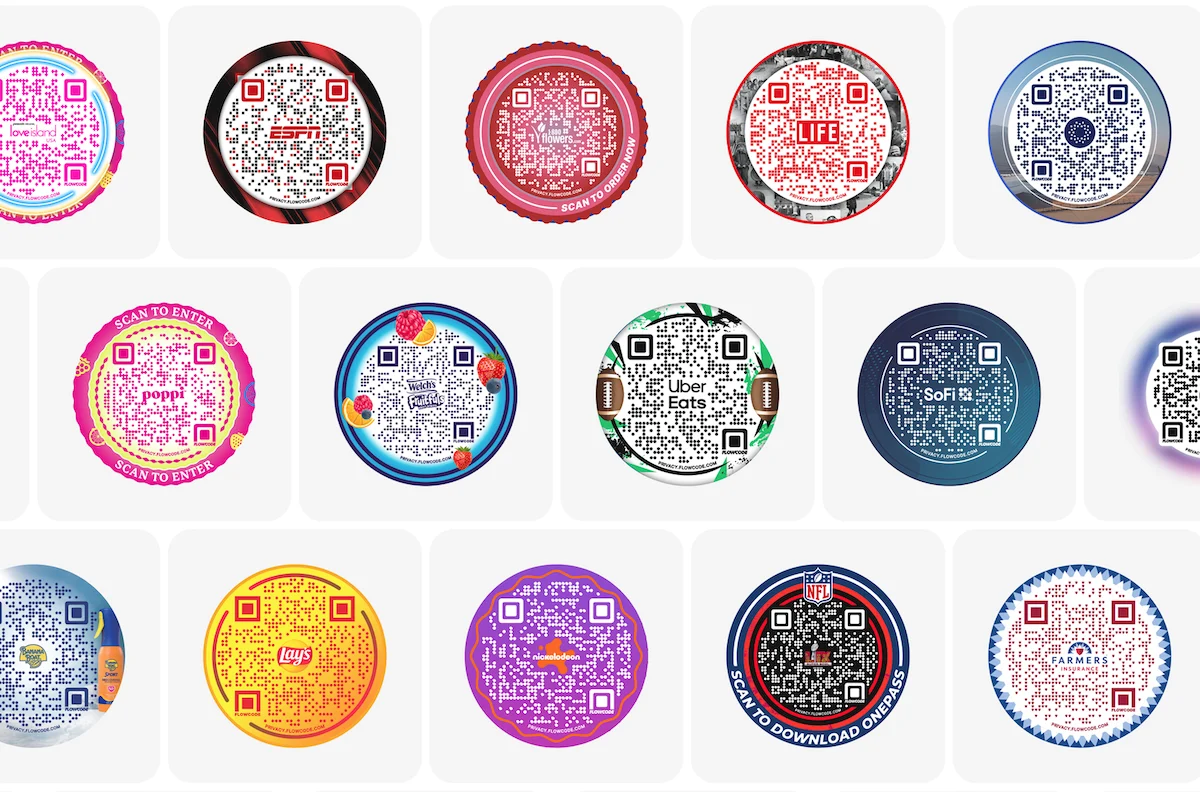
Design sits on top of the same layer. Because the destination is decoupled from the pattern, the pattern is free to carry a logo, brand colors, and a custom frame without breaking the scan. That is not cosmetic. A branded code reads as legitimate, and legitimacy lifts scan rates on a printed surface where the customer has no other trust signal to go on.
Reliability is the requirement no one lists but everyone assumes. If the redirect layer goes down, every printed code in the field goes dark at once, which is a very different failure than a broken web link. Enterprise programs weigh uptime, support, and platform longevity for exactly this reason: the cost of a redirect outage is measured in reprints and lost campaigns, not a page refresh.
This is also where the free tools and the enterprise platforms diverge hardest. A free QR code generator gives you a redirect and a scan count. It does not give you conditional routing, first-party identity, or a data model your analytics team can query. The redirect is the entry point. It is not the product.
Business and enterprise use cases
Enterprises use dynamic QR codes to make physical touchpoints measurable: packaging that captures first-party data, event activations that prove their return, out-of-home that reports like a digital ad. The common thread is attribution. Surfaces that used to be guesses become channels a marketing leader can defend in a budget review.
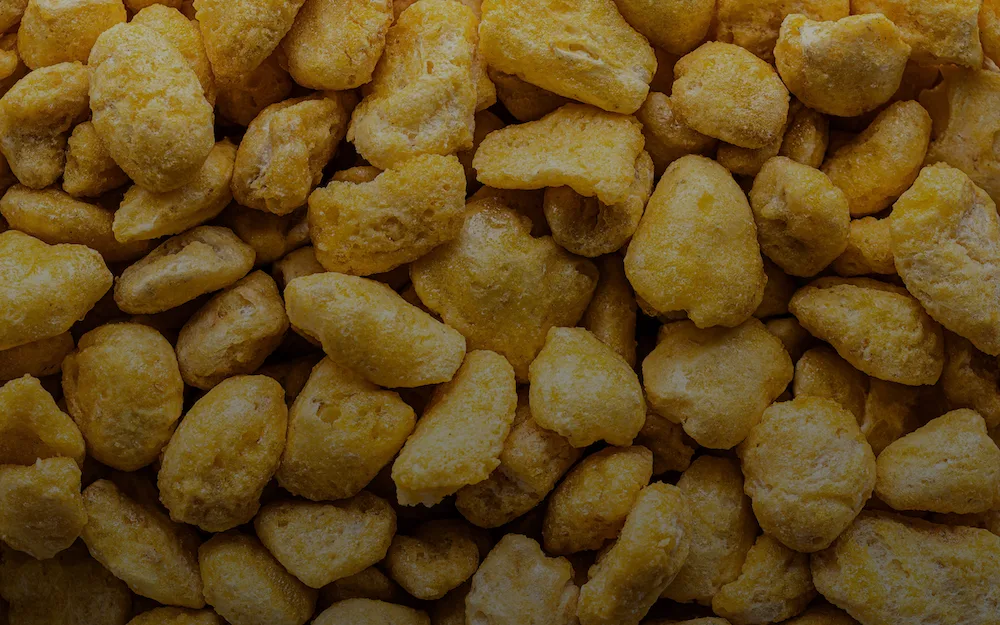
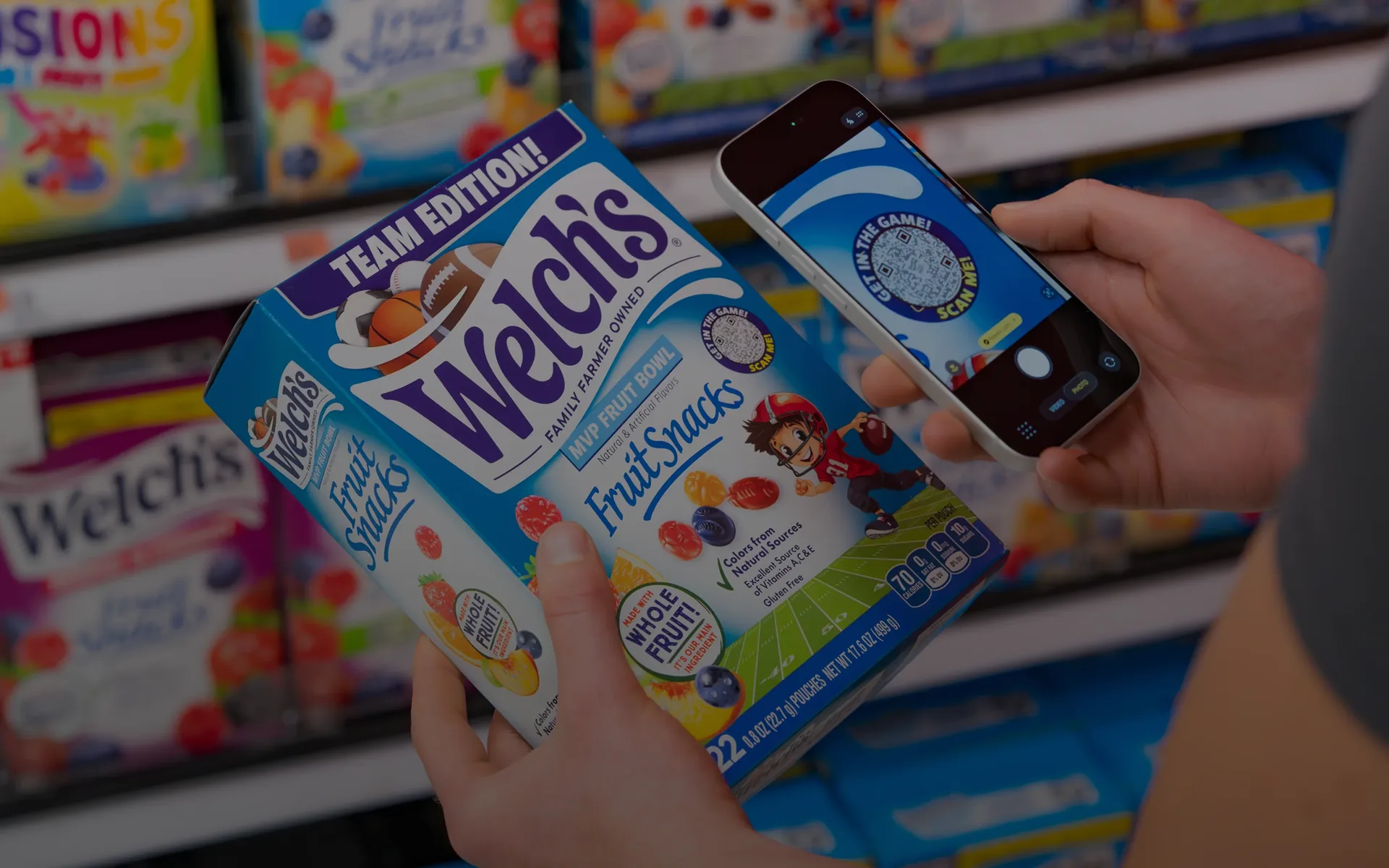
The pattern repeats across verticals. A consumer brand prints a code on packaging and watches it convert. LOVE CORN drove 62% CRM conversion from packaging and added 27,000 new customers from a code most brands would have treated as decoration. Lunchables saw a 22% sales lift from a packaging code. The carton stopped being inventory and became an acquisition channel. The economics are hard to argue with: the packaging was already being printed, already shipping to millions of homes, and already paid for. Adding a dynamic code converts a sunk cost into a measurable data-capture surface at effectively no incremental media spend.
Live events compress the same effect into minutes. NFL Shop ran a single broadcast QR spot and pulled $25,000 in sales, with 10,000 scans and 10,000 engagements inside 60 seconds. Ceremony of Roses turned Zach Bryan's tour merchandise into $1.8 million in incremental revenue and 152,000 fan emails, a first-party audience the artist now owns outright.
At infrastructure scale, CLEAR runs more than 7,000 Flowcodes across airports and has logged over 1.2 million all-time scans, a physical footprint generating a continuous stream of first-party data.
The same mechanics work for demand generation, not only brand marketing. A booth code at a trade show, a code on a direct-mail piece, a code on a printed insert: each one can carry its own destination and its own attribution, so the growth team can finally see which offline touch fed the pipeline instead of crediting the last digital click. When a scan resolves to a form fill and that record lands in the CRM, the booth stops being a line item defended on faith and becomes a source you can rank against paid search. For a director rebuilding an attribution model that currently stops at the digital click, that is the missing input.
For a marketing VP, the use case is never "put a code on it." It is the answer to the question the CFO asks after every sponsorship, launch, or Super Bowl activation: what did we get? One VP put the problem plainly: the digital team has dashboards, and the offline team has guesses. A dynamic QR code turns the guess into a number.
Analytics and attribution with FlowID
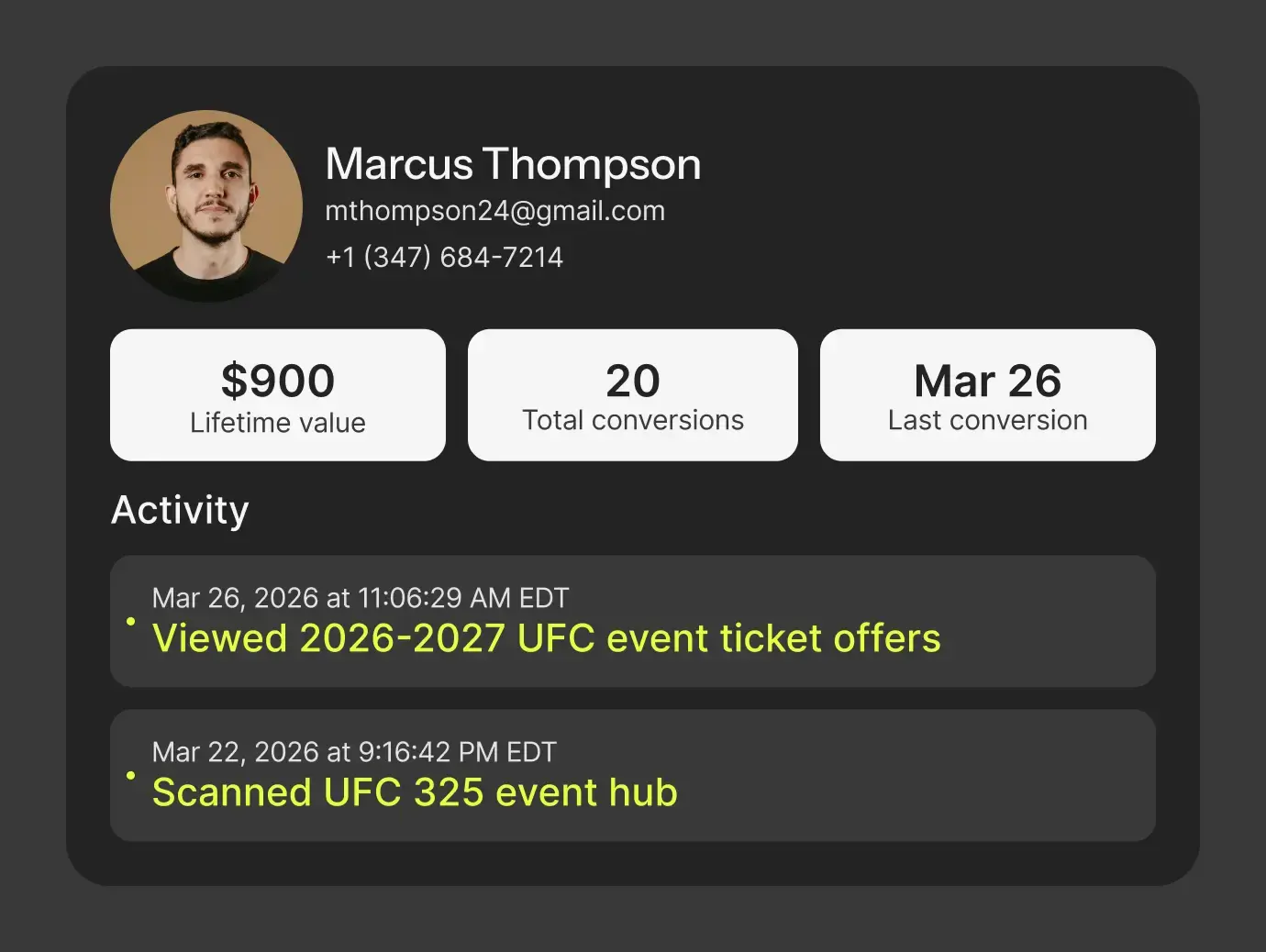
Dynamic QR codes generate scan analytics such as location, device, time, and volume, but attribution is what enterprise teams actually need. FlowID, Flowcode's first-party identity layer, turns each scan into a persistent, brand-owned identity. No cookies, no third-party dependency. Every physical scan becomes a connected record you can follow to conversion.
Scan counts tell you a code worked. They do not tell you what it was worth. The gap between those two facts is exactly where offline marketing loses its budget. Volume metrics and a hopeful story do not survive a finance review; a conversion number tied to spend does.
FlowID closes that gap. Because every scan resolves through Flowcode's infrastructure, each one can be tied to a first-party identity the brand owns, not a cookie that vanishes when a browser updates its privacy policy. That identity persists. A scan on a stadium banner in September and a purchase on the site in October can be recognized as the same person's journey, with consent, rather than two disconnected events.
From there the data has to go somewhere useful. Flowcode's analytics and integrations push scan and conversion data into Salesforce, HubSpot, and Snowflake, so the offline touchpoint appears inside the same attribution model as every paid click. The physical scan stops being a separate report and becomes a row in the pipeline the whole company already trusts.
This matters more as third-party cookies degrade. First-party data captured at a physical moment, a scan the customer chose to make, is durable in a way behavioral tracking never was. The identity you build from your own touchpoints belongs to you.
Attribution also feeds optimization. Once scans resolve to outcomes, you can test which destination actually converts. SmartFlow runs automated A/B tests on where a dynamic code points, so a packaging code can split traffic between two landing experiences and settle on the winner without a reprint or a developer. The measurement loop closes: the code captures the scan, the identity connects it to a conversion, and the test improves the next scan. A static code offers none of this, because there is nothing to measure and nothing to change.
Choosing an enterprise dynamic QR platform
An enterprise dynamic QR platform should be judged on four things: whether it captures first-party identity, whether it integrates with your existing stack, whether it meets your security and compliance bar, and whether it will still be running your redirects in five years. Design and scan counts are table stakes. These four decide whether the program scales.
Start with security, because procurement will. Flowcode is SOC 2, GDPR, CCPA, and HIPAA compliant, which is the difference between a tool a single team pilots and a platform legal will approve for a Fortune 500 rollout. A free generator rarely clears that bar, and swapping platforms after codes are already printed is expensive.
Then integration. A dynamic QR program only creates value if its data lands where decisions get made. If scans cannot reach Salesforce, HubSpot, or your warehouse, you have added another dashboard, not another channel. The right platform treats the CRM connection as the point, not an afterthought.
The most common objection sounds reasonable: "we already have a QR solution." Usually that solution is a free generator producing static images, or a link tool that bolts QR onto short URLs as an add-on. Neither captures first-party identity, routes by rule, or ties a scan to revenue. Flowcode was built QR-first for the offline-to-online journey, backed by more than 15 patents on code generation, conditional routing, and conversion measurement. Having a code and having an attribution platform are different things.
Longevity is the last filter, and it is easy to underrate. A dynamic code is only as permanent as the company hosting its redirect. If that vendor folds or retires the free tier, the codes in the field stop working, and you cannot patch a printed carton. Enterprises favor platforms with real funding, a real customer base, and a track record, because the downside of betting wrong is physical.
Pricing scales from a free tier to enterprise; you can review scalable pricing when the program is ready to grow.
How to create a dynamic QR code
To create a dynamic QR code, choose a platform that supports editable destinations, enter your target URL, brand the design, then download the code for print or digital use. The process takes minutes. What separates a throwaway code from an enterprise asset is what happens after the download: routing, identity, and attribution.
- Pick a platform built for dynamic codes. Confirm it supports editable destinations, scan analytics, and CRM integration, not just a one-time image. A free tool that only makes static codes cannot be upgraded later, because the redirect has to exist from the start.
- Set your destination URL. Enter the page, form, or mobile landing experience the code should open. With a dynamic code, this stays fully editable afterward, so an imperfect first choice is never permanent.
- Brand the design. Add your logo, colors, and frame. A branded code lifts scan rates and signals legitimacy in a way a generic black-and-white square does not.
- Add routing with Smart Rules. Configure time, geography, or device conditions if one code needs to serve different audiences. Skip this for a single-destination code.
- Connect analytics and identity. Turn on scan analytics and, for enterprise programs, FlowID, so each scan feeds a first-party record and flows into your CRM.
- Download and deploy. Export the code in a print-ready format, place it on your asset, and edit the destination anytime without reprinting.
You can start free. Flowcode's free QR code generator makes a branded, dynamic-capable code in minutes, and the enterprise stack of Smart Rules, FlowID, and integrations is there when the program scales past a single campaign.
Frequently asked questions
What is a dynamic QR code?
A dynamic QR code is a scannable code that stores an editable redirect URL instead of a fixed destination. You can change where it points after printing and record every scan's location, device, and time. That makes it the standard choice for any campaign, package, or event that has to report results.
What is the difference between a dynamic and static QR code?
A static QR code hard-codes its destination and can never change once generated. A dynamic QR code stores an editable redirect, so you can update the target anytime and measure scans at the individual level. Static suits permanent links; dynamic suits anything tied to a campaign or a budget.
Can you change a dynamic QR code after printing?
Yes. Editing the destination is the defining feature of a dynamic QR code. Because the printed pattern only encodes a redirect URL, you update where it points on the platform, and the code on the page never changes. A typo, an expired offer, or a new campaign becomes a dashboard edit rather than a reprint.
How do I know if my QR code is dynamic?
Check whether you can edit the destination after creation without generating a new image. If the destination is editable and the platform reports scan analytics, the code is dynamic. If it was exported as a fixed image with no dashboard behind it, it is static and cannot be changed.
Are dynamic QR codes worth it for business?
For anything measurable, yes. A static code is free but records nothing and cannot change. A dynamic code turns a physical touchpoint into a data-generating channel: editable, brandable, and attributable to conversion. Enterprise programs on Flowcode see an average value of $250 per scan.
Can I make a dynamic QR code for free?
Yes. Flowcode's free tier creates branded, dynamic-capable codes with basic scan analytics. The paid and enterprise plans add Smart Rules routing, FlowID identity resolution, and CRM integrations. You start free and add the attribution stack when the program scales past a single code.
The offline channel, finally measured
The QR code stopped being a novelty years ago. What matters now is whether the code on your packaging, your booth, or your broadcast spot can answer a simple question: what did it do? A static code cannot. A dynamic QR code can. It edits after print, routes by rule, and turns every scan into first-party data that lands in the same pipeline as your digital spend.
That is the shift Flowcode was built for, with 75% of the Fortune 500 already running on it.