1. Our team will reach out in <30 minutes.
Check your inbox or phone, we’ll tailor your demo to your use case.
2. We build your custom demo
Flowcodes, FlowURLs, and FlowHubs with the data behind the whole platform - so you see exactly what Flowcode unlocks.
3. You go live in days
Our team handles setup. You handle growth.








.webp)



.png)
.png)
.png)
.png)

.png)
%20copy%203.png)
.png)

Back to all articles
What NFL Shop and the Pittsburgh Penguins Prove About TV Attribution
September 3, 2026

NFL Shop and the Pittsburgh Penguins ran completely different broadcast placements, but the same five principles, from screen time to identity capture, are what turned both into measurable revenue instead of vague brand exposure.
Broadcast attribution comes down to four repeatable checks, not the size of the budget. NFL Shop ran a national retail spot and drove $25,000 in revenue from a single placement. The Pittsburgh Penguins ran a live in-game offer and converted at 88%. Different budgets, different reach, and both turned an on-air moment into measurable revenue. The formats change. The playbook doesn't.
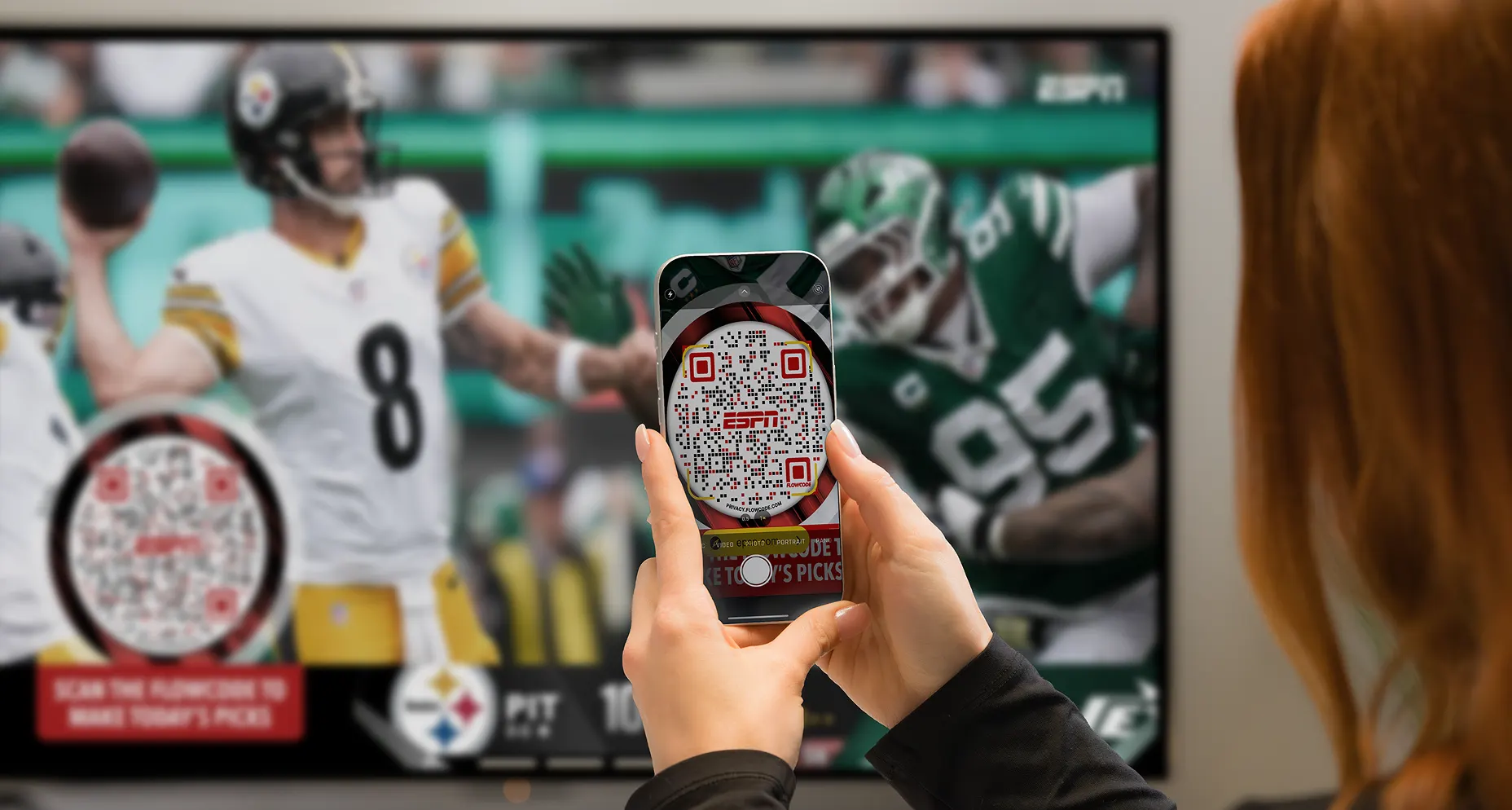
1. The Flowcode is on screen long enough to act on
Every one of these results came from a placement designed to be acted on, not glanced at. A Flowcode on screen for two seconds is a logo. A Flowcode on screen for the length of a chorus or a live read is a call to action.
2. The destination matches the ask
NFL Shop viewers landed on a purchase flow, not a homepage, which is a meaningful reason the spot drove $25,000 in revenue from a single broadcast placement. The Penguins' viewers landed straight on a discounted product page and converted at 88%. In both, the number of taps between "I saw the Flowcode" and "I did the thing" was minimized deliberately.
Why does removing one extra tap matter this much? Because attention on a broadcast spot is short-lived. Every additional step between exposure and purchase is another moment for a viewer to get distracted and never complete the action.
3. Incentive and urgency compound each other
The Penguins' discount drove $8,000 in 30 minutes because it paired a real reason to act with a closing window. A steep offer earns an immediate purchase; a lighter ask, like an entry to win, trades margin for reach. The lesson isn't "always discount." It's "match the incentive to the size of the ask."
4. Identity turns a moment into a relationship
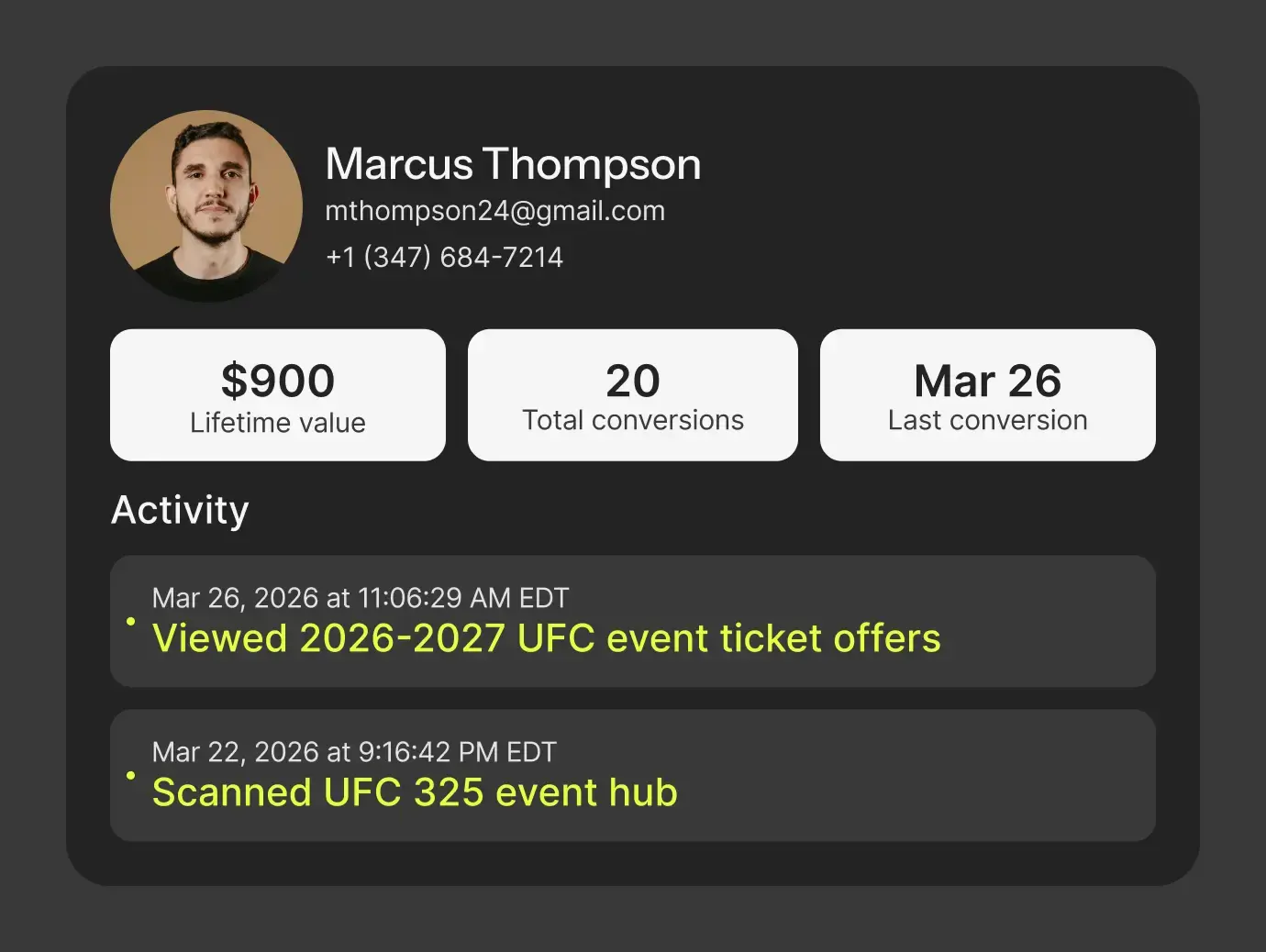
Every connection from these spots became a first-party record, not a one-time touchpoint. That's the difference between a fleeting touchpoint and a connection: a touchpoint ends when the moment does, while a connection persists into a record Flowcode's FlowID can recognize across touchpoints, so a fan who connects during a game is still known weeks later.
5. The proof is a number, not an adjective
None of these results read as "engaging" or "successful." They read as $25,000 from one broadcast spot, 10,000 connections in 60 seconds, $8,000 in 30 minutes, and an 88% conversion rate. That specificity is what makes them usable in a media plan review instead of a highlight reel.
What this means for your next placement
Before you buy broadcast, OOH, or streaming inventory, run the same four checks these advertisers passed: keep the Flowcode on screen long enough to act on, match the destination to the ask, size the incentive to that ask, and capture every connection with an identity layer so it outlives the moment. Get those right, and the placement stops being a brand exercise. It becomes a revenue line with a timestamp.