1. Our team will reach out in <30 minutes.
Check your inbox or phone, we’ll tailor your demo to your use case.
2. We build your custom demo
Flowcodes, FlowURLs, and FlowHubs with the data behind the whole platform - so you see exactly what Flowcode unlocks.
3. You go live in days
Our team handles setup. You handle growth.








.webp)
.png)
.png)
.png)
.png)

.png)
%20copy%203.png)
.png)

Back to all articles
Flow Finds IRL: August 2026 Roundup
August 27, 2026
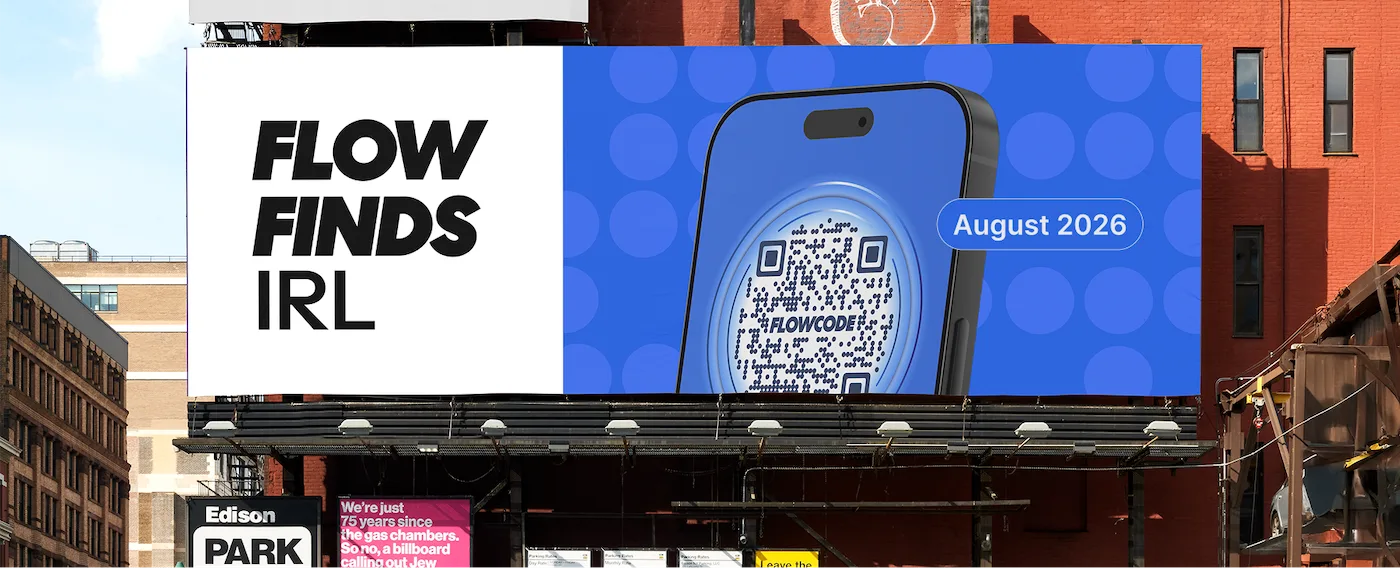

State Farm turned a broadcast into a live game, and Wheels Up turned a scan into a concierge-style travel journey, two very different answers to the same question: what should happen after someone scans?
Out of all the activations we saw this month, two stood out the most for how well they read their own audience. Both start with the same entry point, a Flowcode, but from there they've built for two completely different rooms. State Farm turned a broadcast segment into a game a couch full of fans could play along with. Wheels Up turned a scan into a FlowHub as polished as the car week crowd it was built for. Same platform, two very different jobs: gamification and elevated experience, and both worth breaking down.
On-Air Sweepstakes: When Placement and a Clear CTA Do the Work
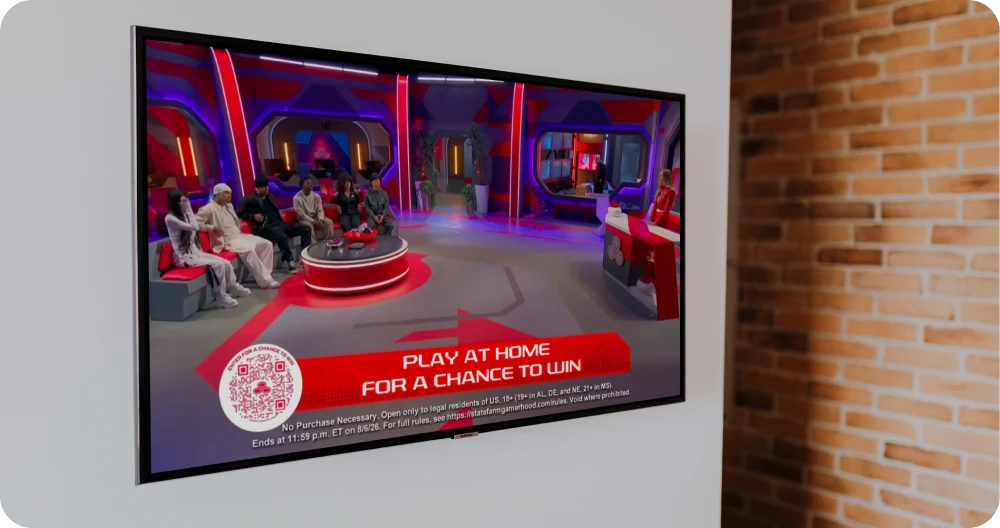
A static code asks for a scan. What separates a placement people ignore from one that converts usually isn't complexity, it's precision: the right spot on screen, paired with a single, unmistakable ask.
Gamerhood, State Farm's original gaming talk show, used a Flowcode overlaid on air to invite the home audience into a sweepstakes for a chance to win, extending the show's on-air moment straight into living rooms. The mechanic works because it doesn't ask viewers to leave what they're watching or figure out what to do next. One code, one ask, layered directly into a segment they were already watching.
The strength of this kind of placement isn't a gimmick, it's clarity. A well-placed code with a single, obvious CTA gives a brand something a cluttered ad never does: a direct read on who's actually paying attention, captured the moment interest peaks rather than reconstructed later from impressions. That only works if the ask is simple enough to act on without breaking focus from what's already on screen.
Why it worked: the CTA mirrored what was already happening on screen, one clear ask at the right moment. The audience didn't have to be sold on a separate offer; they just had to act on the one already in front of them.
Event Infrastructure: When the Digital Moment Has to Match the Physical One
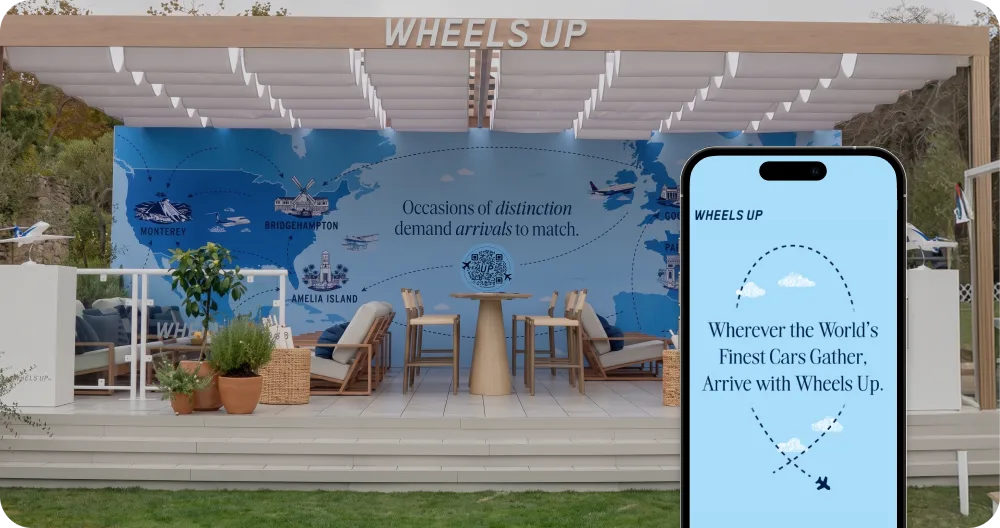
At a live event, the safest move is a functional one: a schedule, a map, a way to redeem an offer. Wheels Up skipped that and built something closer to a travel feature than a landing page. Scanning their Flowcode at Monterey Car Week and the destination wasn't a menu of links; it was a scrollable, illustrated journey through marquee stops around the world, ending in a single, concierge-style call to action: speak with a flight advisor.
The same logic applies anywhere a brand's audience is already paying for exclusivity. A utility-first FlowHub works when the goal is convenience. A brand-first hub works when the goal is reinforcing why someone chose the premium option in the first place, and Wheels Up built for the latter.
Why it worked: matching the production value of the FlowHub to the caliber of the event is what makes it feel like a continuation of the brand, not a marketing add-on. An elevated event calls for an elevated experience, not just a functional one.
Conclusion
One entry point, two completely different destinations. Gamerhood proved a scan can turn a broadcast into something fans want to play. Wheels Up proved a scan can carry the same polish as the room it's dropped into. Neither is the "right" answer on its own. The right call comes down to knowing what job the code needs to do before deciding what's behind it.
Note: Images shown reference real-world Flowcode placements identified via publicly available sources. These examples are provided for editorial use only and do not imply endorsement, partnership, or approval by the brands shown.